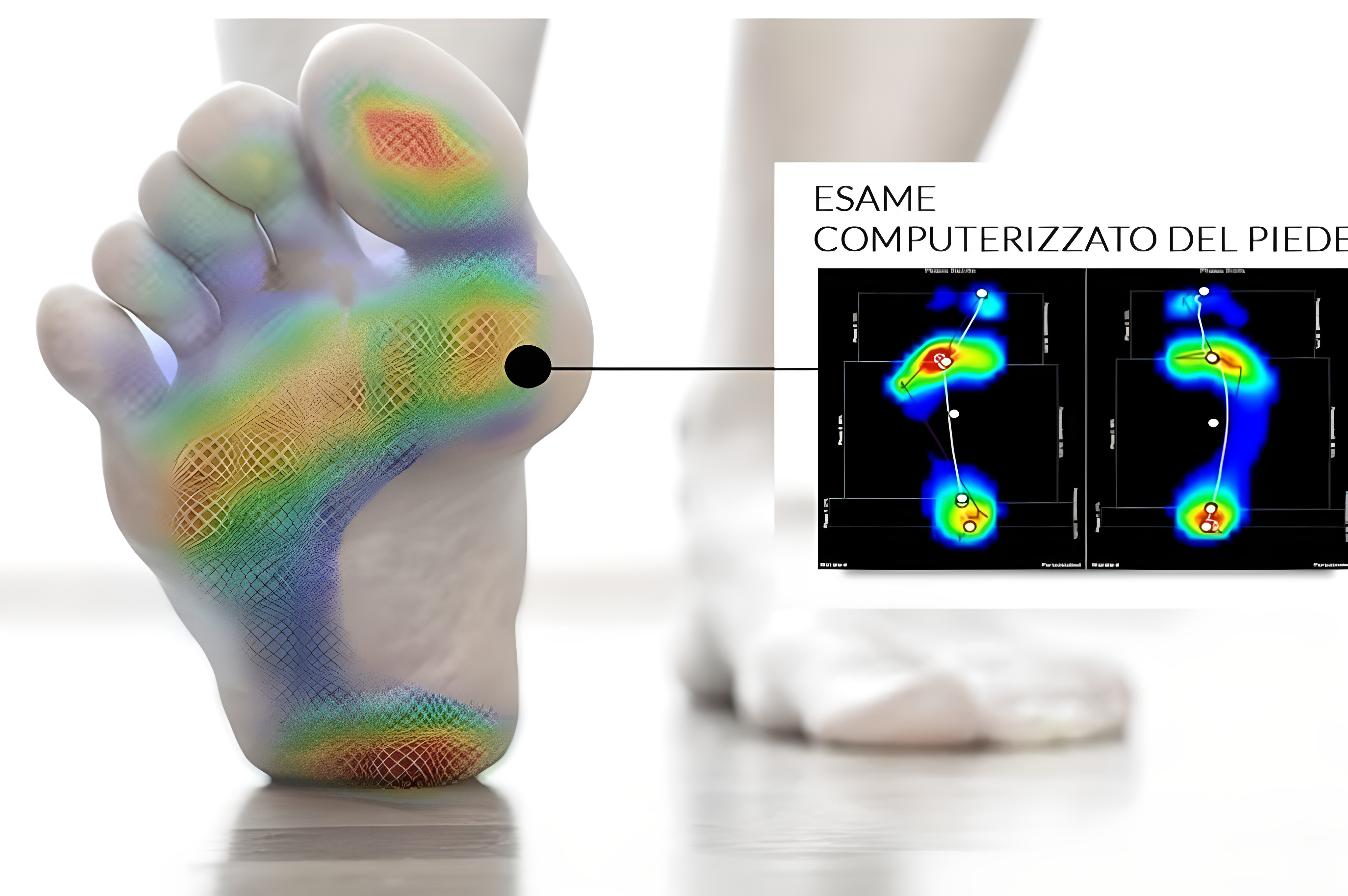
The baropodometric plate maps plantar pressures and body barycenter, providing objective data on your posture and balance.
An essential exam to understand how you distribute your weight, identify asymmetries and plan targeted postural interventions.
2000+
Sensors
5 min
Duration
100%
Non-Invasive
Analyzes "how much" you weigh on each point of the foot. Detects pressure peaks that cause calluses and pain (metatarsalgias, heel spurs).
Analyzes "how" you maintain balance. Measures micro-oscillations of your body (Romberg) to understand how much energy you spend standing still.
Anterior/posterior percentage, right/left. Identifies overloads.
Foot shape: flat, arched, normal. Maximum load areas.
Position of body center of mass and its oscillations.
Differences between right and left side, postural compensations.
During the stabilometric exam, we'll ask you to stand still first with eyes open and then with eyes closed. Why?
Measures how much you depend on sight to maintain balance. If closing your eyes makes you sway much more, your proprioceptive system (feet/muscles) might be weak.
Center of Pressure (CoP)
The exact point where your barycenter falls.
Isobars (Colors)
Red = High pressure (danger). Blue = Low pressure.
Romberg Trajectory
The path of your micro-oscillations. Smaller = More stable.
How is the exam performed?
You position yourself barefoot on the plate for a few seconds in static position, then walk for dynamic analysis. The entire exam takes about 5-10 minutes.
Do I need preparation?
No special preparation required. Wear comfortable clothing that allows freedom of movement.
What is the report for?
The report guides treatment: postural exercises, Taopatch®, or other therapies. It's also useful for monitoring progress over time.
Objective data to understand how you stand and walk. Book your baropodometric exam.
Book Exam